Pests, Diseases & Plant Health: Common Cannabis Pests
Every cannabis grower will eventually encounter pests. Even the cleanest indoor grow room cannot be completely isolated from insects forever. The key is not expecting to avoid pests entirely—it's learning how to identify them early and respond before they become a serious infestation.
Regular inspections, good sanitation, and maintaining a healthy growing environment are your best defenses. Catching a pest problem during its early stages is almost always easier than trying to eliminate an established colony.
Preventing Pest Problems
Prevention should always be your first line of defense. A clean grow room greatly reduces the chance of introducing insects into your plants.
Good preventative practices include:
- Cleaning your grow space between harvests.
- Removing dead leaves and plant debris.
- Inspecting new plants before introducing them.
- Maintaining proper temperature and humidity.
- Monitoring plants regularly with a magnifying loupe.
- Keeping pets and outdoor plants away from your grow room.
Spending just a few minutes inspecting your plants each day can prevent weeks of frustration later.
Aphids
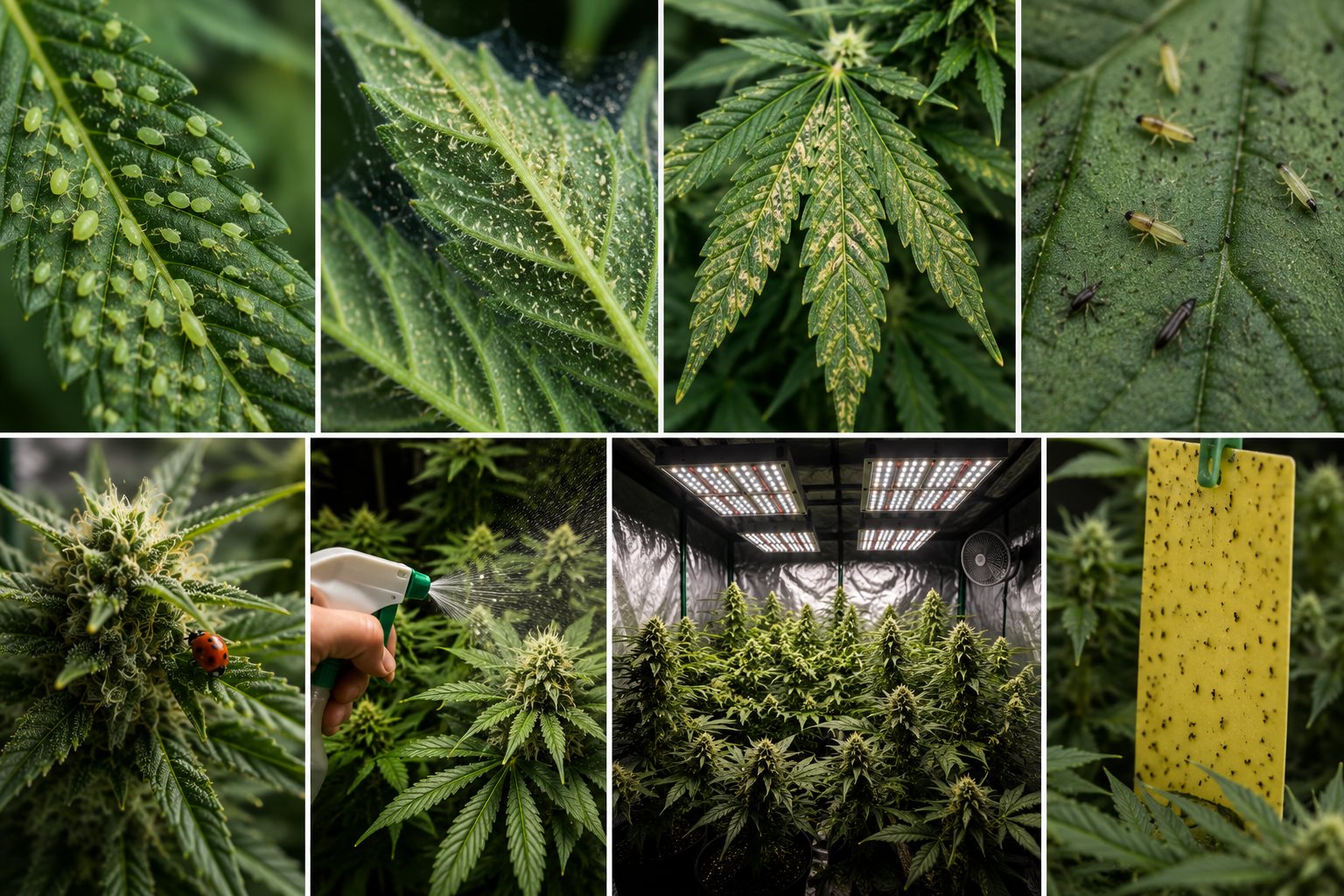
Aphids are among the most common cannabis pests. These tiny insects feed by piercing the plant and sucking nutrient-rich sap from stems and leaves.
Common signs of an aphid infestation include:
- Yellowing leaves
- Stunted plant growth
- Leaf curling or twisting
- Sticky honeydew residue
- Sooty mold developing on leaves
Since some nutrient deficiencies can produce similar symptoms, always inspect the undersides of leaves for insects or eggs before assuming nutrition is the problem.
Treatment Options
- Insecticidal soap
- Diluted dish soap spray
- Neem oil treatments
- Regular leaf inspections
- Repeat treatments every few days if necessary
Avoid excessive nitrogen fertilization whenever possible, as aphids are often attracted to lush, nitrogen-rich growth.
Spider Mites
Spider mites are microscopic arachnids that feed by extracting sap from cannabis plants. Left untreated, they reproduce rapidly and can spread throughout an entire grow room.
Early warning signs include:
- Tiny yellow or brown feeding spots
- Leaves losing color
- Fine webbing between leaves
- Declining plant vigor
Spider mites typically hide on the undersides of leaves, making routine inspections extremely important.
Treatment Options
- Beneficial ladybugs
- Neem oil
- Insecticidal soap
- Natural horticultural sprays
- Removing heavily infested leaves
Spider mites thrive in hot, dry environments. Maintaining proper humidity can make your grow room less attractive to these pests.
Thrips
Thrips are another common cannabis pest that feed by scraping plant tissue before consuming plant fluids. This feeding style causes extensive cosmetic and structural damage to leaves.
Symptoms may include:
- Silvery streaks on leaves
- Pale patches
- Black specks of waste
- Damaged leaf surfaces
- Reduced plant vigor
Heavy infestations can significantly slow plant growth and damage developing flowers.
Treatment Options
- Neem oil
- Beneficial insects
- Insecticidal soap
- Plant-safe organic sprays
- Frequent monitoring
Natural Pest Control
Many growers prefer natural pest management before resorting to stronger pesticides.
Popular natural solutions include:
- Neem oil
- Insecticidal soap
- Beneficial insects such as ladybugs
- Sticky monitoring traps
- Regular cleaning and sanitation
Always research any product before applying it to cannabis plants, especially during flowering, when residues may remain on harvested buds.
Environmental Management
Healthy plants are naturally more resistant to pests than stressed plants. Environmental control plays an important role in preventing infestations.
Monitor and maintain:
- Temperature
- Relative humidity
- Air circulation
- Proper watering practices
- Balanced nutrition
- Clean growing equipment
Stable growing conditions help reduce plant stress while making your environment less favorable for many common pests.
Common Cannabis Pests at a Glance
| Pest | Primary Damage | Common Symptoms | Typical Treatment |
|---|---|---|---|
| Aphids | Plant sap removal | Yellow leaves, curling, sticky residue | Neem oil, insecticidal soap |
| Spider Mites | Leaf damage and sap loss | Speckled leaves, webbing | Ladybugs, neem oil |
| Thrips | Leaf scraping and feeding | Silvery streaks, black spots | Neem oil, beneficial insects |
Final Thoughts
Pest management isn't about eliminating every insect forever—it's about catching problems early before they become serious infestations.
Regular inspections, good sanitation, proper environmental control, and early intervention are the most effective tools every cannabis grower has. Healthy plants grown in a clean, well-maintained environment are far less likely to experience devastating pest outbreaks.
Continue Learning
New to growing cannabis? Explore more step-by-step guides covering germination, vegetative growth, flowering, harvesting, drying, curing, nutrients, lighting, and common plant problems.
Start Tracking Your Grow the Smart Way
Join growers using PLNTRK to track plants, log data, monitor VPD, and improve yields with powerful tools designed for modern cannabis cultivation.
Gallery