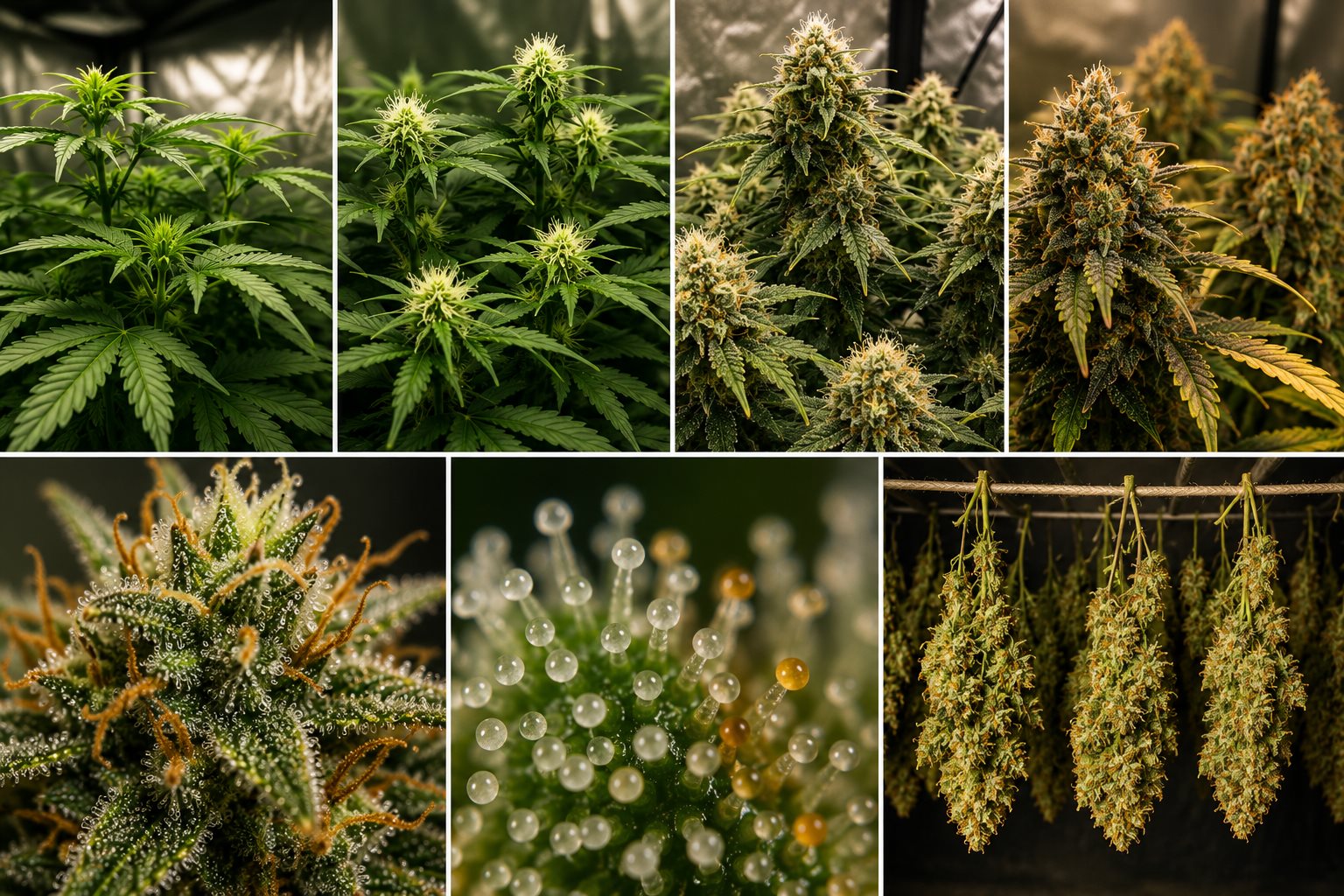
Stages of Growth: The Flowering Stage
The flowering stage is the most exciting part of the cannabis life cycle. After weeks of building roots, branches, and healthy foliage, the plant begins directing its energy toward producing dense, resin-covered flowers.
During this phase you'll begin to notice pistils, trichomes, sugar leaves, and eventually large colas developing. Aroma also increases significantly, making proper ventilation and odor control much more important for indoor growers.
Flowering is where all of your hard work during germination, seedling, and vegetative growth begins to pay off.
When Should You Flip to Flower?
This decision only applies to photoperiod cannabis plants. Autoflowers transition into flowering automatically based on age.
Switching a photoperiod plant into flower is commonly called "the flip". It occurs by changing the lighting schedule from approximately 18 hours on / 6 hours off to 12 hours on / 12 hours off.
Before flipping, consider two important factors:
- The amount of vertical grow space available.
- Your desired final plant size and harvest.
Most cannabis plants continue stretching after the lighting schedule changes and may nearly double in height during the first few weeks of flowering. Planning for this growth helps prevent plants from growing into the lights.
Autoflower vs. Photoperiod Flowering
| Plant Type | Flower Trigger | Grower Control |
|---|---|---|
| Autoflower | Plant age | Cannot delay flowering |
| Photoperiod | 12/12 light schedule | Grower chooses when flowering begins |
Autoflower growers should focus on avoiding stress during early growth because lost time cannot be recovered. Photoperiod growers have more flexibility and can extend the vegetative stage until the plant reaches the desired size.
How Long Does Flowering Last?
Flowering time varies considerably depending on genetics.
- Fast flowering varieties: approximately 6 to 7 weeks
- Most hybrid strains: approximately 8 to 10 weeks
- Long flowering cultivars: 12 to 16 weeks or longer
Always use breeder recommendations as a general guideline, but rely on the plant itself rather than the calendar when deciding harvest time.
Environmental Conditions During Flower
Flowering plants continue requiring stable environmental conditions. Consistent temperatures, proper humidity, fresh airflow, and adequate lighting all contribute to healthy flower development.
Good airflow becomes especially important as buds become larger and denser. Dense flowers can trap moisture, increasing the risk of mold if humidity is too high.
Many indoor growers also install activated carbon filters during flowering to help reduce the strong aroma produced by mature cannabis plants.
Feeding During Flower
Flowering plants generally consume more water than they did during early growth. As flowers develop, nutrient requirements also change.
Many feeding programs gradually reduce nitrogen while increasing nutrients that support flower production. Always make changes gradually and monitor the plant for signs of nutrient deficiencies or excesses.
Healthy flowering plants should maintain vigorous growth while steadily increasing flower size and resin production.
Watching the Trichomes
The most reliable way to determine harvest timing is by observing the trichomes growing on the buds.
A small jeweler's loupe or handheld microscope makes it possible to inspect these tiny resin glands up close.
As flowers mature, trichomes generally progress through three stages:
- Clear
- Cloudy (Milky)
- Amber
Trichomes found on the buds provide a much better indication of maturity than those found on nearby sugar leaves.
Understanding Trichome Color
| Trichome Color | Plant Maturity | General Effect |
|---|---|---|
| Clear | Immature | Not ready for harvest |
| Cloudy | Peak THC production | More uplifting and energetic effects |
| Amber | More mature | Generally associated with heavier, relaxing effects |
Waiting too long after a large percentage of trichomes become amber may result in declining THC potency as cannabinoids continue changing over time.
Preparing for Harvest
Harvest timing is ultimately determined by the grower's goals and careful observation of the plant.
Before harvest, continue monitoring:
- Trichome development
- Pistil maturity
- Overall flower density
- Plant health
- Environmental conditions
Patience during the final weeks often produces better flavor, aroma, and resin development than harvesting too early.
Common Flowering Stage Problems
| Problem | Possible Cause | What to Check |
|---|---|---|
| Stretching | Light too far away | Light intensity and distance |
| Bud Rot | High humidity | Humidity and airflow |
| Nutrient Burn | Overfeeding | EC/PPM and feeding schedule |
| Foxtailing | Heat or genetics | Temperature and light intensity |
| Weak Aroma | Early harvest or poor genetics | Harvest timing and plant health |
Final Thoughts
Flowering is the reward for everything you've done during the earlier stages of cultivation. Proper environmental control, patience, and careful observation are the keys to producing healthy, resin-rich flowers.
Rather than relying solely on breeder timelines, learn to read your plants. Watching trichomes mature is one of the most valuable skills any cannabis grower can develop, helping you harvest at the ideal moment for your preferred results.
Continue Learning
New to growing cannabis? Explore more step-by-step guides covering germination, vegetative growth, flowering, harvesting, drying, curing, nutrients, lighting, and common plant problems.
Start Tracking Your Grow the Smart Way
Join growers using PLNTRK to track plants, log data, monitor VPD, and improve yields with powerful tools designed for modern cannabis cultivation.
Gallery