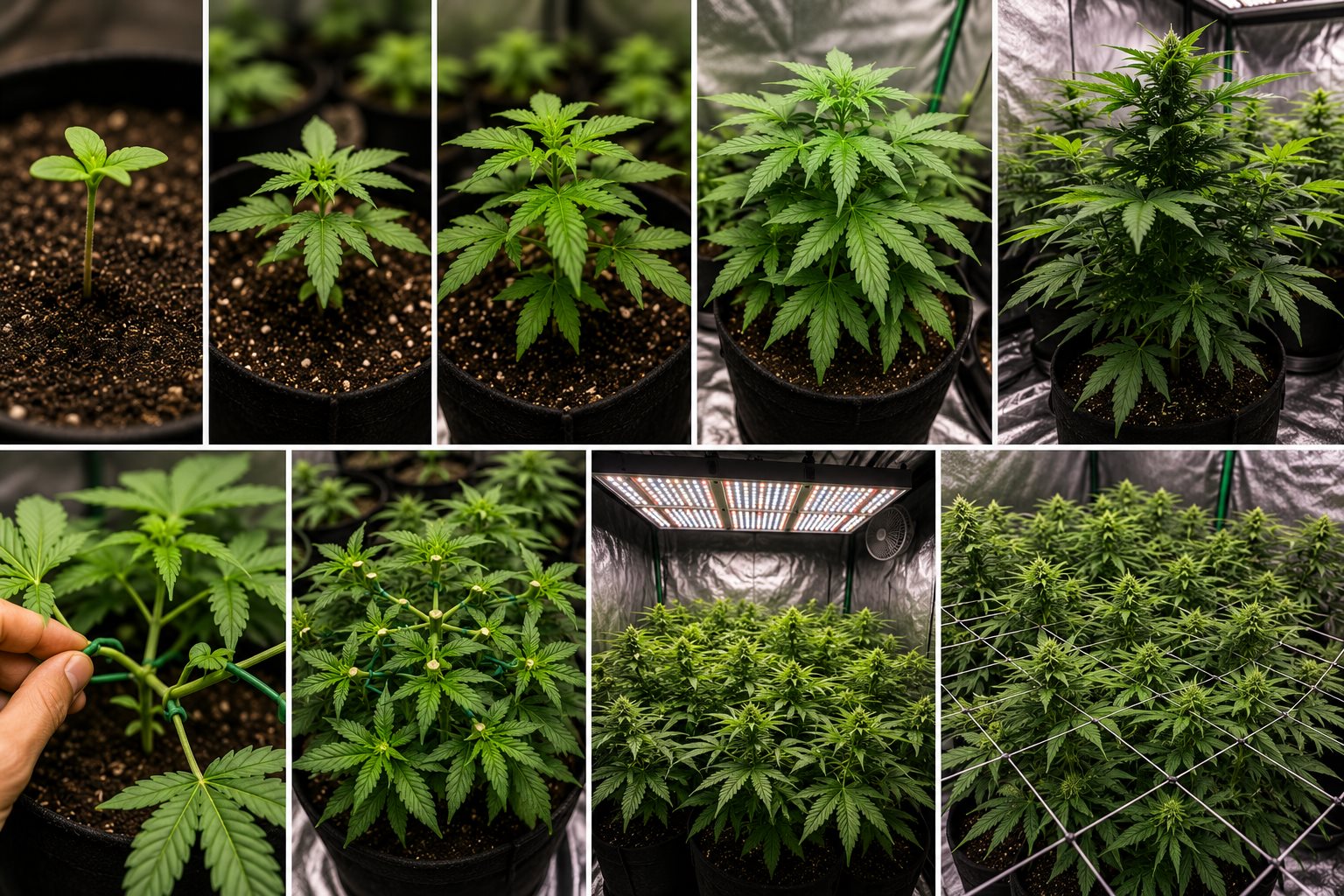
Stages of Growth: The Vegetative Stage
Once your cannabis plant has established a healthy root system and several sets of true leaves, it enters the vegetative stage. This is often the fastest period of growth and, for photoperiod plants, can also be the longest.
During vegetation, the plant focuses on producing new stems, branches, leaves, and roots rather than flowers. The stronger and healthier the plant becomes during this stage, the better prepared it will be for flowering later.
This is also the stage where growers begin shaping the plant through training techniques that improve light penetration, airflow, and ultimately harvest potential.
How Long Does the Vegetative Stage Last?
The answer depends largely on the type of cannabis seed you are growing.
Autoflowering Plants
Autoflowering cannabis plants transition into flowering based primarily on age rather than changes in the lighting schedule.
Most autoflowers remain in vegetation for approximately 6 to 12 weeks before flowering begins automatically. Because this schedule cannot be delayed, environmental stress during vegetation may reduce the plant's final size and yield.
Photoperiod Plants
Photoperiod plants remain in vegetation until the grower changes the lighting schedule from long daylight hours to approximately 12 hours of light and 12 hours of darkness.
This gives growers tremendous flexibility. Plants can remain in vegetation for several weeks or several months depending on available space, plant size, and cultivation goals.
Many growers prefer photoperiod plants because they allow additional time for recovery after transplanting, pruning, nutrient corrections, or other unexpected setbacks.
Rapid Growth Begins
During the vegetative stage, cannabis plants begin growing rapidly. Branches extend, leaves become larger, and the root system expands throughout the container.
Healthy vegetative growth creates the framework that will eventually support heavy flowers during the flowering stage.
This is also when many growers begin:
- Low Stress Training (LST)
- Topping
- FIM pruning
- Defoliation
- SCROG (Screen of Green)
- Canopy management
These techniques are designed to improve light distribution, create more flowering sites, and encourage a flatter, more productive canopy.
Water Requirements Increase
One of the biggest changes growers notice during vegetation is how quickly plants begin consuming water.
As the root system expands and leaf surface increases, plants transpire more water and require more frequent irrigation than they did during the seedling stage.
Rather than watering on a fixed schedule, monitor the growing medium and allow it to dry appropriately between waterings.
Water requirements will vary depending on:
- Container size
- Plant size
- Growing medium
- Temperature
- Humidity
- Airflow
- Lighting intensity
Feeding During Vegetation
As plants grow larger, their nutritional requirements also increase. Many growers gradually increase nutrient strength throughout the vegetative stage while monitoring the plant's response.
Nitrogen becomes especially important because it supports vigorous leaf and stem development.
Avoid increasing nutrients too quickly. Healthy green growth is the goal—not dark, overfed plants with burned leaf tips.
Watch for signs such as:
- Slow growth
- Pale leaves
- Burned leaf tips
- Leaf curling
- Dark green foliage
- Nutrient deficiencies
Managing the Environment
Just like seedlings, vegetative plants perform best in a stable environment. Different cannabis strains may have slightly different environmental preferences, making research an important part of cultivation.
If growing multiple strains together, compare their recommended environmental ranges and choose conditions that overlap as much as possible.
Environmental factors to monitor include:
- Temperature
- Relative humidity
- Air circulation
- Fresh air exchange
- Lighting intensity
- CO₂ availability
Stable conditions are generally more beneficial than constantly changing settings while chasing a perfect number.
Light During Vegetation
Vegetative plants require considerably more light than seedlings.
Most indoor growers maintain an 18-hour light and 6-hour dark schedule for photoperiod plants during vegetation. Autoflowering plants may receive similar or even longer lighting schedules since they do not rely on darkness to trigger flowering.
Strong, even lighting encourages compact growth, sturdy stems, and healthy branch development.
Preparing for Flowering
Vegetation is the ideal time to prepare your plants for flowering.
Before switching a photoperiod plant into bloom, many growers complete:
- Final transplanting
- Plant training
- Canopy leveling
- Lower branch cleanup
- Defoliation where appropriate
- Equipment inspection
Taking time to prepare now often results in healthier flowers and easier plant management during bloom.
Common Vegetative Stage Problems
| Problem | Possible Cause | Suggested Check |
|---|---|---|
| Slow Growth | Low light or nutrient deficiency | Lighting intensity and feeding schedule |
| Drooping Leaves | Overwatering | Container drainage and watering frequency |
| Pale Leaves | Nitrogen deficiency | Nutrient levels and pH |
| Burned Tips | Excess nutrients | Reduce feeding concentration |
| Stretching | Insufficient light | Fixture height and PPFD |
| Uneven Canopy | Natural apical dominance | Consider low stress training |
Final Thoughts
The vegetative stage is where cannabis plants build the structure that supports everything that follows. Healthy roots, strong branches, and vigorous leaf growth all contribute to a more productive flowering cycle.
Give your plants enough time to mature, maintain a stable environment, and avoid rushing into flowering before they are ready. A healthy vegetative stage is one of the best investments you can make toward achieving a successful harvest.
Continue Learning
New to growing cannabis? Explore more step-by-step guides covering germination, vegetative growth, flowering, harvesting, drying, curing, nutrients, lighting, and common plant problems.
Start Tracking Your Grow the Smart Way
Join growers using PLNTRK to track plants, log data, monitor VPD, and improve yields with powerful tools designed for modern cannabis cultivation.
Gallery