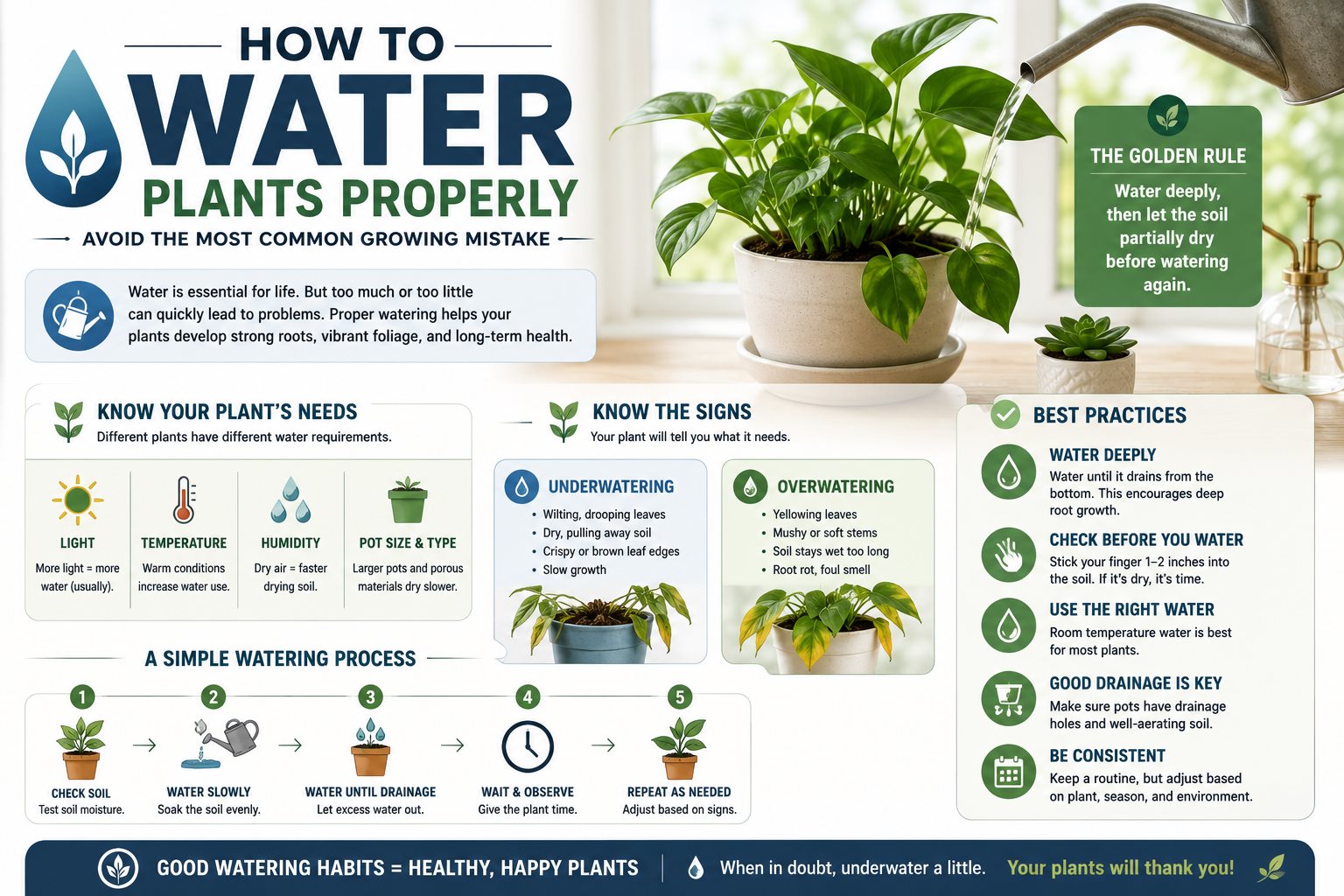
If there is one mistake that nearly every new cannabis grower makes, it's improper watering. In fact, many of the problems beginners blame on nutrients, lighting, genetics, or disease are actually caused by watering issues.
Water is essential for plant growth, but more water does not necessarily mean healthier plants. Cannabis roots need both water and oxygen. When either becomes unavailable, plants begin to struggle.
Learning how to water correctly is one of the fastest ways to improve plant health, growth speed, and overall harvest quality.
Why Watering Matters
Water does much more than simply keep a plant alive.
Cannabis plants use water to:
- Transport nutrients throughout the plant
- Support photosynthesis
- Regulate temperature
- Maintain cell structure
- Drive growth and development
Without proper watering, even the best genetics, lighting, and nutrients cannot perform their job effectively.
The Biggest Myth: More Water Is Better
Many new growers see a drooping plant and immediately assume it needs water. Unfortunately, overwatered plants often look very similar to underwatered plants.
This causes many growers to add even more water, making the problem worse.
Cannabis roots require oxygen just as much as they require moisture. When soil remains constantly soaked, oxygen levels decrease and root health begins to suffer.
Understanding the Root Zone
The root zone is where all the magic happens. Healthy roots absorb water, nutrients, and oxygen from the growing medium.
Imagine breathing through a straw while someone slowly fills it with water. Eventually, breathing becomes difficult.
Cannabis roots experience something similar when they remain submerged in overly wet soil for long periods.
Healthy roots need a balance of:
- Moisture
- Oxygen
- Nutrients
Watering correctly helps maintain that balance.
Signs of Overwatering
Overwatering is far more common than underwatering, especially among beginners.
- Drooping leaves
- Puffy or swollen-looking leaves
- Slow growth
- Yellowing leaves
- Persistent wet soil
- Fungus gnats
- Root rot issues
Overwatered plants often appear heavy and sluggish. Leaves may droop downward but still feel firm and full of moisture.
Signs of Underwatering
Underwatered plants usually look more dramatic and often recover quickly after watering.
- Drooping leaves
- Dry soil
- Lightweight containers
- Wilted appearance
- Dry or brittle leaves
Unlike overwatered plants, underwatered leaves often appear limp and lifeless rather than swollen.
The Pot Weight Method
One of the simplest and most effective watering techniques is the pot weight method.
After a full watering, pick up your container and feel its weight. Then allow the plant to use that water over several days.
Eventually, the container will feel noticeably lighter. This is often a good indication that it's time to water again.
Experienced growers frequently use this method instead of relying on fixed watering schedules.
Why Fixed Watering Schedules Can Be Dangerous
Many new growers ask:
"Should I water every day?"
The truth is there is no universal watering schedule.
Water consumption depends on:
- Plant size
- Container size
- Temperature
- Humidity
- Growth stage
- Growing medium
- Light intensity
A small seedling in a large container may only need water every several days. A large flowering plant may drink multiple liters per day.
Watering Seedlings
Seedlings require special attention because they have very small root systems.
One of the biggest mistakes is soaking the entire container around a tiny seedling.
Instead, provide small amounts of water near the seedling and gradually increase the watering radius as the root system expands.
The goal is to encourage roots to search outward for moisture.
Watering During Vegetative Growth
During vegetative growth, root systems expand rapidly and water consumption increases significantly.
Plants may require larger and more frequent waterings as they grow.
Monitor container weight and plant appearance rather than following a strict schedule.
Watering During Flowering
Flowering plants often consume more water than at any other point in their lifecycle.
Large buds require significant moisture and nutrient movement.
Some growers are surprised to find that mature flowering plants can consume several times more water than they did during early vegetative growth.
How Much Water Should You Use?
There is no perfect number because every grow is different.
A common goal is to water thoroughly enough that a small amount of runoff exits the bottom of the container.
This helps ensure the entire root zone receives moisture and can help reduce salt buildup over time.
The Importance of Drainage
Proper drainage is critical.
Containers should have drainage holes that allow excess water to escape.
Standing water at the bottom of a pot can contribute to root problems and oxygen deprivation.
Healthy roots require access to fresh air.
How Environment Affects Watering
Environmental conditions play a major role in how often plants need water.
- Higher temperatures increase water consumption
- Lower humidity increases transpiration
- Stronger lighting increases demand
- Larger plants drink more water
- Higher VPD generally increases water use
This is why growers often notice dramatic differences in watering frequency between seasons.
Should You Water in the Morning or Evening?
Indoor growers typically water shortly after lights turn on.
Outdoor growers often prefer watering early in the morning.
This allows plants to actively use water during the day when photosynthesis is occurring.
Common Beginner Watering Mistakes
- Watering on a strict schedule
- Keeping soil constantly wet
- Using containers with poor drainage
- Giving seedlings too much water
- Ignoring container weight
- Not checking runoff
- Confusing overwatering with underwatering
Tracking Watering Data
One of the easiest ways to improve as a grower is to track your watering history.
Recording:
- Date watered
- Water volume
- pH
- Nutrients used
- Plant response
can help identify patterns and prevent future problems.
Many growers are surprised by how much insight they gain simply by maintaining consistent records.
Final Thoughts
Watering cannabis correctly is not about following a rigid schedule. It's about understanding what your plant needs and learning how to read the signals it provides.
Healthy roots lead to healthy plants. By allowing proper wet and dry cycles, maintaining good drainage, and monitoring your environment, you can avoid many of the most common growing mistakes.
Remember: when in doubt, it is often better to wait a little longer before watering than to constantly keep the root zone saturated. Cannabis plants are remarkably resilient, and healthy roots are the foundation of every successful harvest.
Continue Learning
New to growing cannabis? Explore more step-by-step guides covering germination, vegetative growth, flowering, harvesting, drying, curing, nutrients, lighting, and common plant problems.
Start Tracking Your Grow the Smart Way
Join growers using PLNTRK to track plants, log data, monitor VPD, and improve yields with powerful tools designed for modern cannabis cultivation.
Gallery