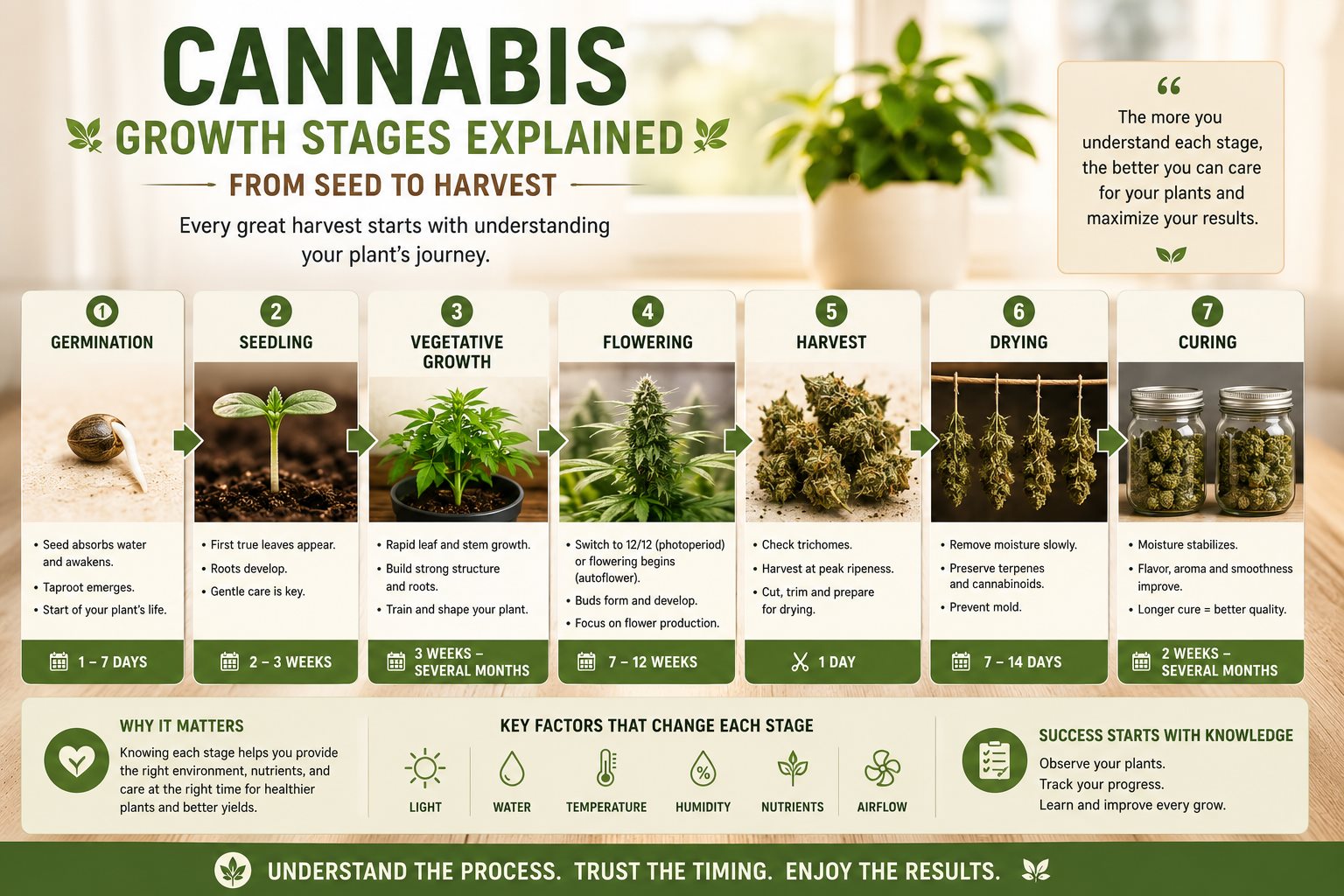
One of the most exciting parts of growing cannabis is watching a tiny seed transform into a mature plant covered in flowers. Every successful harvest follows a series of growth stages, each with its own unique characteristics, environmental requirements, and grower responsibilities.
Understanding these stages is one of the most important skills a grower can develop. Knowing what your plant should look like, how quickly it should be growing, and what care it requires during each phase can dramatically improve your results.
In this guide, we'll walk through the complete cannabis lifecycle, from germination all the way through drying and curing.
Why Growth Stages Matter
Cannabis plants don't need the same care throughout their entire lives. Nutrient requirements, watering needs, humidity levels, lighting schedules, and environmental conditions change as the plant develops.
Understanding growth stages allows growers to:
- Provide proper nutrients at the right time
- Adjust environmental conditions appropriately
- Identify potential problems early
- Plan harvest dates more accurately
- Improve overall yields and quality
Think of it like raising a child. The needs of an infant are very different from those of a teenager. Cannabis plants follow a similar progression throughout their lifecycle.
The Complete Cannabis Lifecycle
- Germination
- Seedling
- Vegetative Growth
- Flowering
- Harvest
- Drying
- Curing
Each stage plays an important role in producing healthy, high-quality cannabis.
Stage 1: Germination
Germination is the process where a cannabis seed awakens and begins growing. This is the official start of your plant's life.
During germination, moisture penetrates the seed shell, activating the embryo inside. Eventually, a small white taproot emerges.
Most seeds germinate within:
1 to 7 days
What You'll See
- Seed absorbs moisture
- Seed shell cracks open
- Taproot emerges
- Root begins searching for moisture
Grower Goals
- Maintain warmth
- Maintain moisture
- Avoid oversaturation
- Handle seeds carefully
Stage 2: Seedling Stage
Once the seedling breaks through the growing medium, the seedling stage begins.
This is one of the most delicate stages in the plant's life. The root system is small, growth is relatively slow, and young plants are vulnerable to environmental stress.
Seedling stage typically lasts:
2 to 3 weeks
What You'll See
- Cotyledon leaves emerge
- First true leaves appear
- Root system develops
- Slow but steady growth
Environmental Targets
- Higher humidity
- Moderate temperatures
- Gentle lighting
- Light watering
Common Mistakes
- Overwatering
- Overfeeding nutrients
- Using lights that are too intense
- Allowing temperatures to fluctuate dramatically
Stage 3: Vegetative Growth
The vegetative stage is where cannabis plants focus on building their structure. This is the stage where plants develop stems, branches, leaves, and root systems.
Healthy vegetative growth creates the foundation for successful flowering later.
Vegetative growth may last:
3 weeks to several months
The duration depends on the grower's goals, available space, and cultivation style.
What You'll See
- Rapid leaf production
- Stem thickening
- Branch development
- Fast root growth
- Increased water consumption
Plant Priorities
- Building a strong framework
- Expanding root systems
- Maximizing photosynthesis
- Preparing for flower production
Grower Tasks
- Training plants
- Pruning if desired
- Managing canopy structure
- Monitoring nutrient intake
- Tracking growth progress
Training During Vegetative Growth
Many growers perform plant training during the vegetative stage.
Training techniques help create more flowering sites and improve light penetration.
Popular methods include:
- Topping
- Low Stress Training (LST)
- Screen of Green (SCROG)
- Mainlining
- Defoliation
The vegetative stage is often the best time to shape the plant before flowering begins.
Photoperiod vs Autoflower Plants
Before discussing flowering, it's important to understand the difference between photoperiod and autoflower cannabis plants.
Photoperiod Plants
Photoperiod plants begin flowering when light schedules change, typically moving from 18 hours of light to 12 hours of light each day.
Autoflower Plants
Autoflower plants begin flowering automatically based on age rather than light schedules.
This often results in a shorter overall lifecycle.
Stage 4: Flowering
Flowering is the stage most growers eagerly anticipate. During this phase, the plant shifts its focus from producing leaves and branches to producing flowers.
Flowering generally lasts:
7 to 12 weeks
depending on genetics and growing conditions.
Early Flower
During the first few weeks, plants often experience a period called "the stretch."
- Rapid vertical growth
- Formation of flower sites
- Increased nutrient demand
Mid Flower
- Bud formation accelerates
- Trichomes begin developing
- Aromas become stronger
- Plant growth slows
Late Flower
- Buds swell
- Trichome production increases
- Terpene production peaks
- Plants prepare for harvest
How Do You Know When It's Time to Harvest?
One of the biggest mistakes growers make is harvesting too early.
While pistils can provide clues, trichomes offer the most reliable harvest indicator.
Clear Trichomes
Too early. Cannabinoids are still developing.
Cloudy Trichomes
Peak potency for many growers.
Amber Trichomes
Increased cannabinoid degradation and often a heavier effect.
Stage 5: Harvest
Harvest marks the end of the growing cycle and the beginning of post-harvest processing.
At harvest, plants are cut down and prepared for drying.
Many growers remove large fan leaves before drying begins.
Harvest Goals
- Preserve cannabinoids
- Preserve terpenes
- Prevent mold
- Prepare for drying
Stage 6: Drying
Drying is often overlooked by beginners, but it has a huge impact on final quality.
Drying too quickly can reduce aroma, flavor, and smoothness.
Drying too slowly can increase mold risk.
Most drying periods last:
7 to 14 days
Ideal Drying Conditions
- Cool temperatures
- Moderate humidity
- Good airflow
- Dark environment
Stage 7: Curing
Curing is where good cannabis becomes great cannabis.
During curing, moisture equalizes throughout the flowers and chemical processes continue that improve flavor, aroma, and overall smoking experience.
Proper curing can significantly improve quality compared to freshly dried flower.
Benefits of Curing
- Smoother smoke
- Better aroma
- Improved flavor
- Long-term storage stability
- Enhanced overall quality
Many growers cure cannabis for several weeks or even months before considering it finished.
Tracking Growth Stages
One of the best habits a grower can develop is recording important growth stage dates.
Useful milestones include:
- Seed planted
- Germination date
- Vegetative start date
- Flowering start date
- Harvest date
- Dry start date
- Cure start date
Tracking these dates makes it easier to forecast harvests, compare grows, and improve future cultivation cycles.
Final Thoughts
Every successful cannabis harvest begins with understanding the plant's lifecycle. From the moment a seed germinates until cured flower is ready to enjoy, each stage presents unique opportunities and challenges.
By learning what your plant needs during germination, seedling growth, vegetation, flowering, drying, and curing, you'll be better prepared to make informed decisions and avoid common mistakes.
The more closely you monitor and document each stage, the easier it becomes to improve with every grow. Cannabis cultivation is a continuous learning process, and understanding growth stages provides the roadmap that guides the entire journey.
Continue Learning
New to growing cannabis? Explore more step-by-step guides covering germination, vegetative growth, flowering, harvesting, drying, curing, nutrients, lighting, and common plant problems.
Start Tracking Your Grow the Smart Way
Join growers using PLNTRK to track plants, log data, monitor VPD, and improve yields with powerful tools designed for modern cannabis cultivation.
Gallery