Pests, Diseases & Plant Health: Common Cannabis Diseases
Cannabis plants can be affected by several diseases, many of which are tied to excess moisture, poor airflow, overwatering, or contaminated growing conditions.
The sooner a problem is identified, the better the chance of protecting the affected plant and preventing the issue from spreading through the rest of the grow.
Three of the most important diseases for growers to recognize are root rot, bud rot, and powdery mildew.
Root Rot
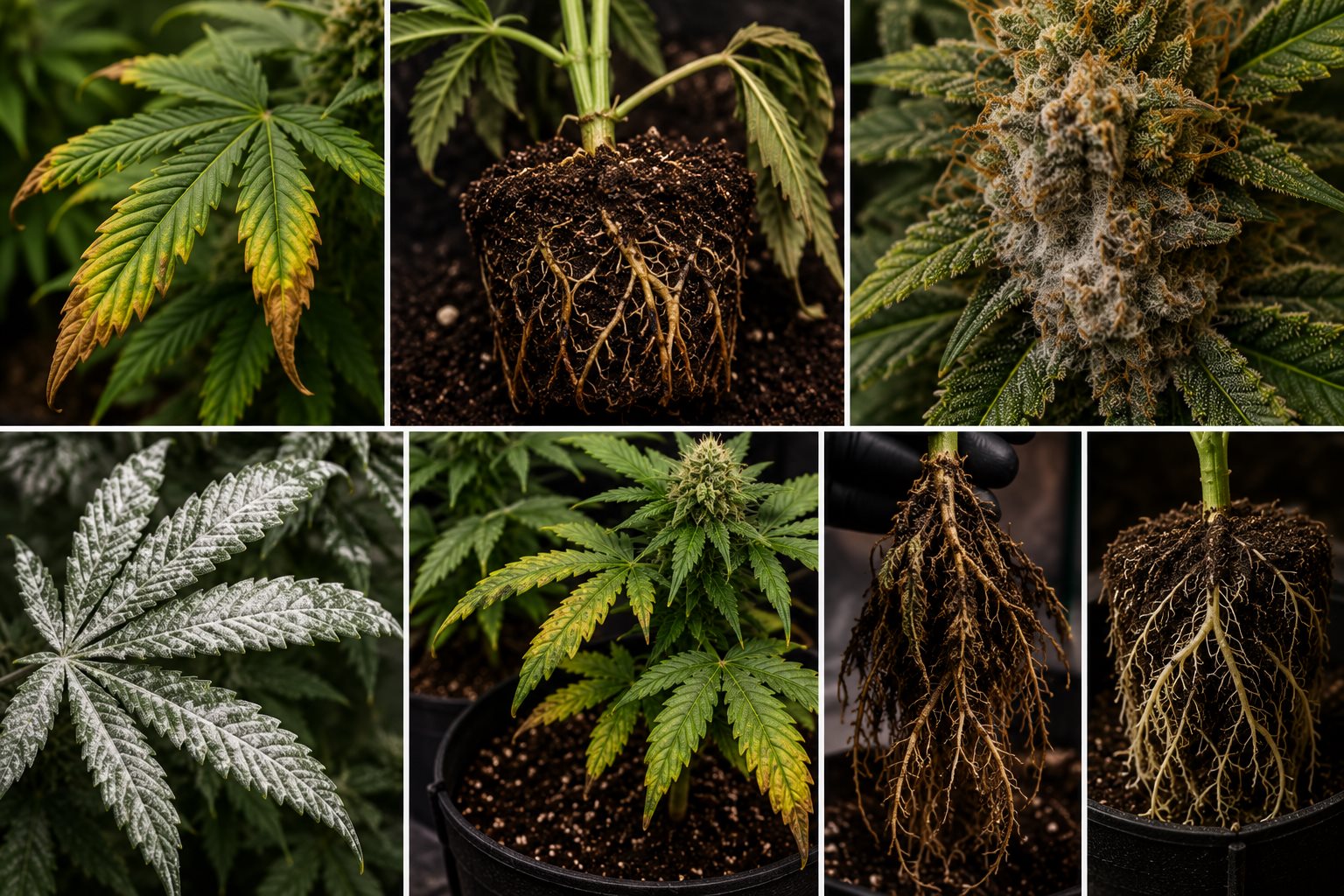
Root rot commonly develops when the root zone remains wet for too long. Cannabis roots need both water and oxygen. When the growing medium becomes waterlogged, oxygen levels drop and harmful fungi or bacteria may begin damaging the roots.
Poor drainage, oversized containers, compacted soil, and watering too frequently can all increase the risk of root rot.
Possible signs of root rot include:
- Drooping or wilting leaves
- Leaves curling downward
- Burned-looking leaf tips or edges
- Yellowing or pale leaves
- Slow or stalled growth
- A foul or rotten smell coming from the soil
Healthy roots are generally light-colored and firm. Roots affected by rot may appear brown, reddish, dark, slimy, or mushy.
Preventing Root Rot
Prevention is much easier than trying to save a plant after the root system has begun deteriorating.
Helpful prevention practices include:
- Using containers with adequate drainage holes
- Choosing a loose, well-aerated growing medium
- Allowing the medium to dry appropriately between waterings
- Avoiding standing water beneath containers
- Keeping tools and containers clean
- Monitoring root-zone temperature
Do not diagnose root rot based on drooping leaves alone. Overwatering, underwatering, heat stress, and nutrient problems can produce similar symptoms.
Treating Root Rot
Advanced root rot can be difficult to reverse. Treatment may require removing the plant from its container and inspecting the root system.
Severely damaged roots may need to be carefully removed before the plant is placed into fresh, clean growing medium.
Potential recovery steps include:
- Remove the plant carefully from its container.
- Gently remove wet or contaminated growing medium.
- Trim away clearly dead, slimy, or rotting roots.
- Clean or replace the container.
- Repot the plant in fresh, well-draining medium.
- Reduce watering while the plant recovers.
- Consider light pruning to reduce stress on the damaged root system.
Recovery is not guaranteed, especially when a large portion of the root system has already been lost.
Bud Rot
Bud rot, commonly associated with Botrytis, is a destructive gray mold that attacks cannabis flowers.
It can be difficult to detect because the infection may begin deep inside a dense bud before becoming visible on the outside.
Warning signs may include:
- Small leaves inside the bud suddenly dying
- White, gray, or dark mold
- Brown or discolored flower tissue
- Soft, slimy, or mushy buds
- A musty or rotten odor
Bud rot produces spores that can spread easily to nearby plants. Avoid shaking or aggressively handling an affected plant.
Responding to Bud Rot
An affected plant should be isolated as quickly as possible. Covering the plant before moving it may help limit the spread of spores through the grow room.
Remove infected flowers carefully and sanitize any tools used during the process. Severely affected plants may need to be discarded to protect the rest of the crop.
Do not consume moldy cannabis. Removing only the visible mold may not eliminate spores or contamination hidden deeper inside the flower.
Preventing Bud Rot
Bud rot is most likely to develop when dense flowers are exposed to excessive moisture and weak airflow.
Prevention strategies include:
- Keeping humidity under control during flowering
- Maintaining steady air circulation
- Providing fresh-air exchange
- Avoiding water on developing flowers
- Spacing plants so air can move between them
- Inspecting dense buds regularly
- Removing dead plant material from the grow area
Powdery Mildew
Powdery mildew is a fungal disease that appears as a white or gray powdery coating on leaves, stems, and sometimes flowers.
It may look as though the plant has been dusted with flour. If untreated, the fungus can spread across the plant, reduce photosynthesis, deform leaves, and contaminate developing buds.
Common symptoms include:
- White powdery spots on leaves
- Yellowing foliage
- Twisted or deformed leaves
- Drying and leaf loss
- Spread from leaves to stems and flowers
Managing Powdery Mildew
If the infection is limited, affected leaves may be removed carefully. Avoid shaking fungal material onto healthy parts of the plant.
After removing infected material, review the grow environment and correct the conditions that allowed the fungus to develop.
Important steps include:
- Reducing excessive humidity
- Improving airflow around and beneath the canopy
- Increasing fresh-air exchange
- Removing dead or crowded foliage
- Cleaning contaminated tools and surfaces
A plant-safe fungicide may be necessary in some situations. Always verify that a treatment is appropriate for cannabis and safe for the current stage of growth.
Airflow and Ventilation
Moving air around the room is helpful, but circulation alone is not always enough. Whenever possible, stale and humid air should be exhausted and replaced with fresher air.
Use circulation fans to prevent stagnant pockets around leaves and flowers, and use an exhaust system to remove warm, humid air from the grow space.
Exhaust fans should pull air out of the grow room rather than force contaminated air, dust, or lint into the cultivation area.
Common Cannabis Diseases at a Glance
| Disease | Primary Cause | Common Signs | Primary Response |
|---|---|---|---|
| Root Rot | Waterlogged root zone and low oxygen | Drooping, yellowing, foul smell, brown or mushy roots | Improve drainage, remove damaged roots, repot |
| Bud Rot | High humidity and moisture inside dense flowers | Gray mold, brown tissue, soft or rotten buds | Isolate plant and remove infected material |
| Powdery Mildew | Fungal growth encouraged by poor airflow and unstable humidity | White powder, yellowing, twisted leaves | Remove affected leaves and correct the environment |
When to Remove a Plant
Saving one severely infected plant is not always worth risking the rest of the grow. Removal may be the safest choice when:
- The disease has spread through most of the plant.
- Mold is present throughout multiple flowers.
- The root system is extensively rotten.
- The infection continues spreading despite treatment.
- Nearby healthy plants are at immediate risk.
Dispose of infected plant material away from the grow area and clean the room thoroughly before beginning another cycle.
Final Thoughts
Most cannabis diseases become much harder to manage once they are well established. Prevention, daily observation, sanitation, and environmental control are the grower's strongest tools.
Avoid chronic overwatering, maintain reliable airflow, control humidity, and inspect roots, leaves, and flowers regularly. Responding early can often protect both the affected plant and the rest of the crop.
Continue Learning
New to growing cannabis? Explore more step-by-step guides covering germination, vegetative growth, flowering, harvesting, drying, curing, nutrients, lighting, and common plant problems.
Start Tracking Your Grow the Smart Way
Join growers using PLNTRK to track plants, log data, monitor VPD, and improve yields with powerful tools designed for modern cannabis cultivation.
Gallery