Pests, Diseases & Plant Health: Common Growing Mistakes
Not every cannabis problem is caused by pests or disease. Many of the most common issues growers encounter are simply part of the learning process.
Nutrient imbalances, improper watering, and incorrect lighting are all capable of producing symptoms that can easily be mistaken for more serious problems. Learning to diagnose these issues carefully will make you a more confident cultivator over time.
Before making changes, take a step back and evaluate the entire growing environment. Multiple problems can produce nearly identical symptoms.
Nutrient Deficiencies vs. Nutrient Excess
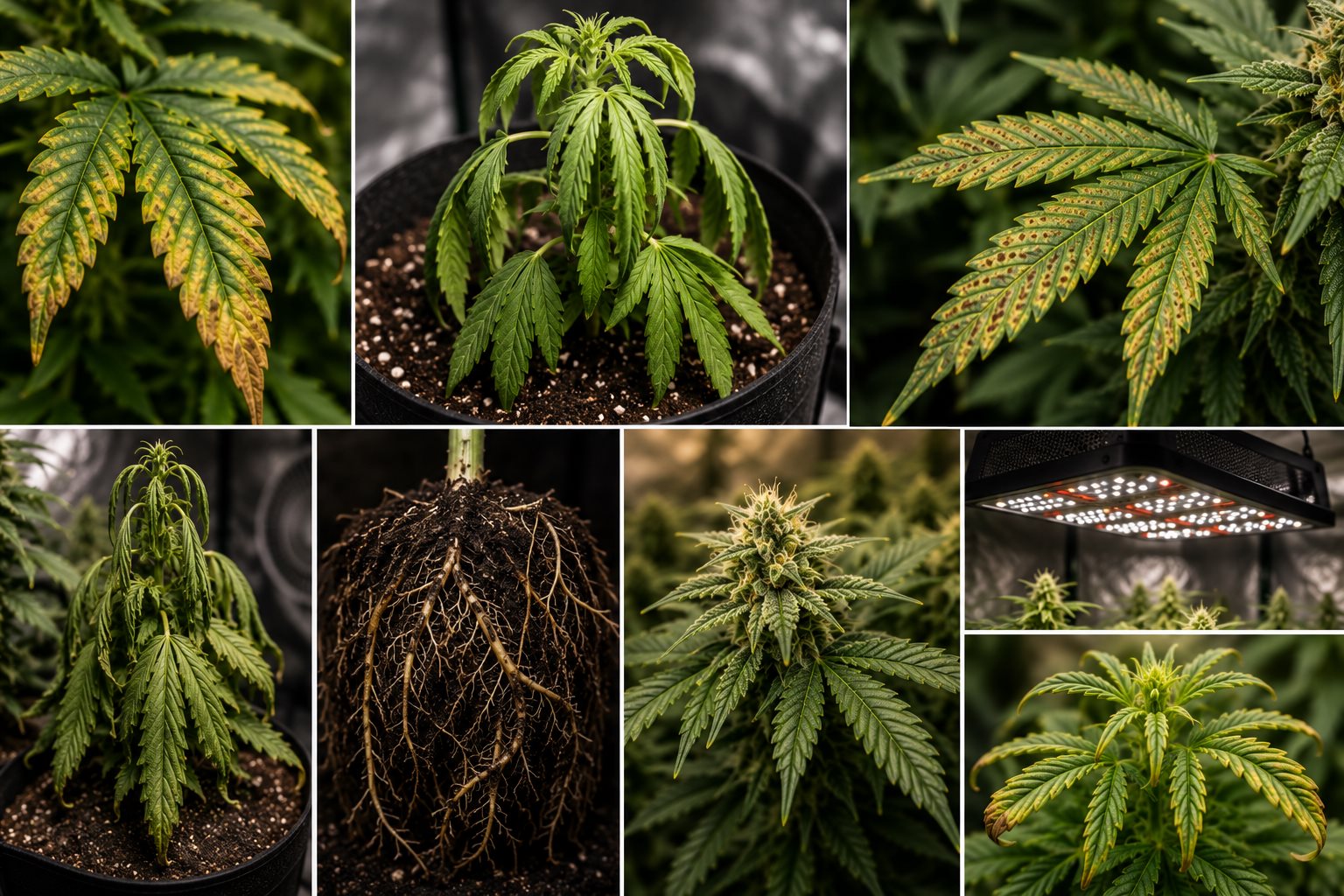
Cannabis plants require a balanced supply of nutrients throughout each stage of growth. Providing too little or too much of a nutrient can create visible symptoms on the leaves, stems, and overall plant structure.
Diagnosing nutrient problems isn't always straightforward. A pale leaf, for example, could indicate a nitrogen deficiency—but it could also result from pH problems, excessive phosphorus or potassium, watering issues, or even lighting stress.
Avoid making corrections based on a single symptom alone. Look for multiple signs that point toward the same cause before adjusting your feeding program.
Common signs of nutrient imbalance include:
- Yellowing or pale leaves
- Brown leaf tips
- Leaf spots or discoloration
- Curling leaves
- Slow or stalled growth
- Unusual coloration between leaf veins
When troubleshooting, also consider environmental factors such as pH, watering habits, pests, disease, and light intensity before assuming nutrition is the problem.
Overwatering
Overwatering is one of the most common mistakes made by new cannabis growers. Cannabis roots require both moisture and oxygen. Constantly saturated soil limits oxygen availability and increases the risk of root problems.
Common symptoms include:
- Drooping leaves
- Firm, swollen foliage
- Leaves curling downward
- Slow plant growth
- Persistently wet growing medium
An overwatered plant often looks heavy and weighed down because the leaves remain full of water while the roots struggle to function properly.
Underwatering
Underwatering can produce drooping plants as well, but the appearance is noticeably different from overwatering.
Signs of underwatering include:
- Limp leaves
- Brittle foliage
- Dry growing medium
- Rapid recovery after watering
- Lightweight containers
Instead of appearing heavy with moisture, underwatered leaves often feel thin, lifeless, and fragile.
While both conditions can damage plants, recovering from underwatering is generally easier than recovering from chronic overwatering and root rot.
Knowing When to Water
Rather than watering on a fixed schedule, many experienced growers monitor the growing medium itself.
The Container Weight Method
One useful technique is learning the weight of your container when it is fully watered compared to when it is nearly dry.
As the plant grows, update your expectations because both the plant and root system continue adding weight throughout the cultivation cycle.
The Finger Test
Another simple approach is inserting a finger approximately two inches into the growing medium to evaluate moisture.
If the medium still feels damp below the surface, watering can usually wait. If it feels dry throughout the upper root zone, it may be time to irrigate.
Perform this test gently to avoid disturbing delicate roots, especially in younger plants.
Light Burn
Light is essential for cannabis growth, but too much light intensity can damage the plant just as easily as too little light can slow development.
Light burn is usually caused by placing high-powered grow lights too close to the canopy or using excessive light intensity without proper adjustment.
Possible symptoms include:
- Bleached or pale upper leaves
- Leaf edges curling upward
- Dry leaf tissue
- Slowed growth
- Stress concentrated nearest the light source
Every lighting system is different. The ideal hanging height depends on fixture type, wattage, lens design, dimmer settings, and the stage of plant growth.
Matching Light Distance to Your Equipment
There is no universal distance that works for every grow light.
Two fixtures with different wattages or designs may require completely different mounting heights, even if they appear similar.
Whenever possible:
- Follow the manufacturer's hanging recommendations.
- Use a PAR or PPFD meter when available.
- Take advantage of adjustable dimmers.
- Observe how the plants respond after making changes.
Adjustable LED fixtures often provide greater flexibility because light intensity can be reduced without moving the fixture excessively high above the canopy.
Troubleshooting Before Making Changes
Many cannabis problems share similar symptoms. Before increasing nutrients, changing watering habits, or moving your lights, ask yourself:
- Has anything recently changed in the environment?
- Is the growing medium too wet or too dry?
- Could pests be causing the damage?
- Have nutrient levels recently changed?
- Has the pH been checked?
- Has the lighting recently been adjusted?
Working through multiple possibilities helps avoid treating the wrong problem and accidentally making the situation worse.
Common Growing Problems at a Glance
| Issue | Common Symptoms | Possible Cause | What to Check |
|---|---|---|---|
| Nutrient Deficiency | Pale leaves, slow growth | Insufficient nutrients or pH issues | Feeding schedule and pH |
| Nutrient Excess | Burned tips, dark leaves | Overfeeding | Nutrient strength |
| Overwatering | Heavy drooping leaves | Constantly wet soil | Drainage and watering frequency |
| Underwatering | Limp, dry foliage | Dry root zone | Soil moisture and container weight |
| Light Burn | Pale upper leaves, curling | Excessive light intensity | Fixture height and dimmer settings |
Final Thoughts
Every grower encounters setbacks. Learning to recognize nutrient issues, watering mistakes, and lighting problems is part of becoming a better cultivator.
Resist the urge to make immediate changes based on a single symptom. Careful observation, patience, and a systematic approach to troubleshooting will help you identify the real cause of a problem and keep your plants healthy throughout the grow.
Continue Learning
New to growing cannabis? Explore more step-by-step guides covering germination, vegetative growth, flowering, harvesting, drying, curing, nutrients, lighting, and common plant problems.
Start Tracking Your Grow the Smart Way
Join growers using PLNTRK to track plants, log data, monitor VPD, and improve yields with powerful tools designed for modern cannabis cultivation.
Gallery